The remote control works up to 10 m and can operate several lights at once.
The Batmissile makes the side panels a moving part
Batman Returns Batmobile 76355 is not just another Batmobile. The 2,269-piece Lego Batman Returns Batmobile is built around a press-button transformation that opens the side panels and reveals the Batmissile, so the car has two display states. That mechanism changes the lighting brief. The LEDs have to make the closed car look right, then survive the panels being moved without catching, stretching or pulling loose.
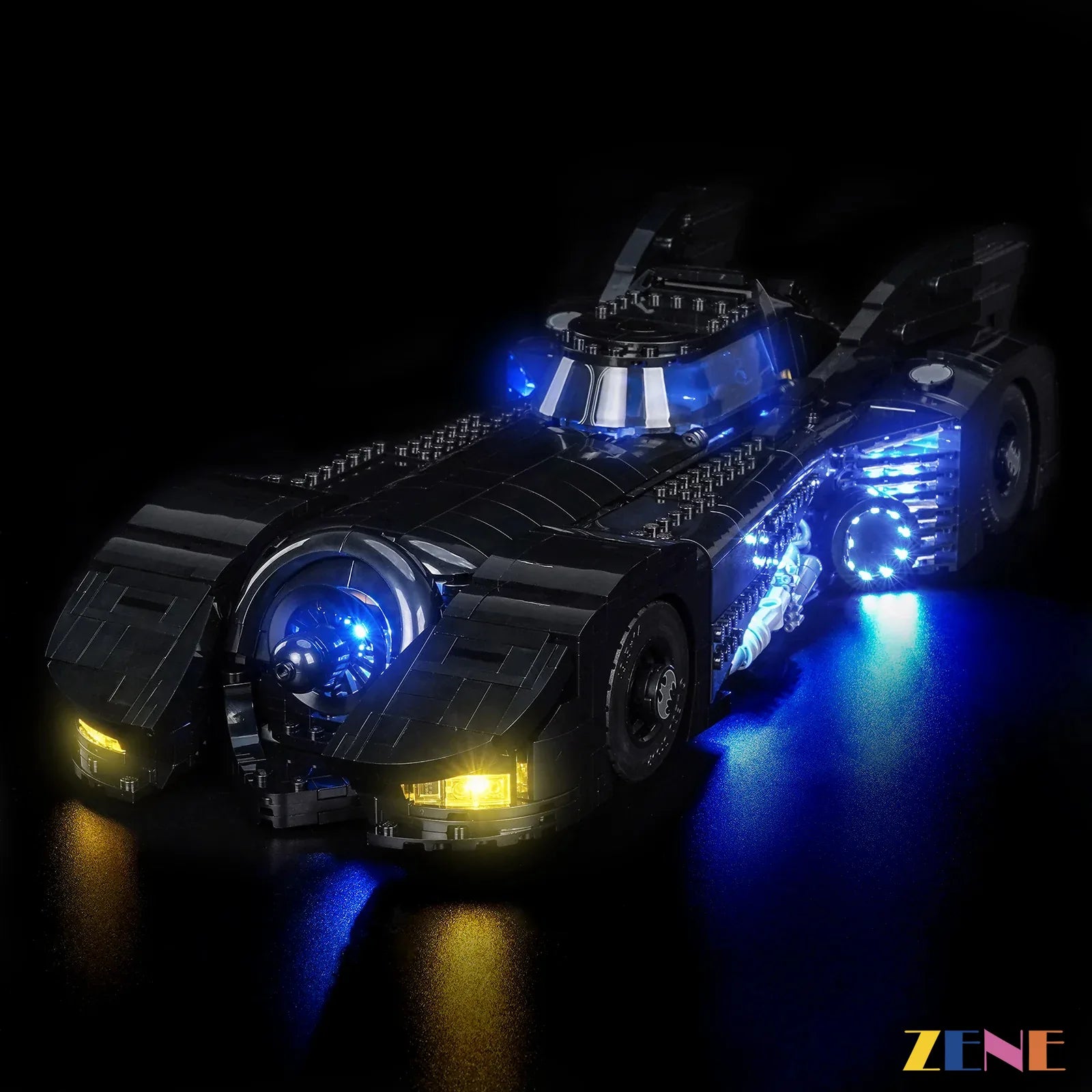
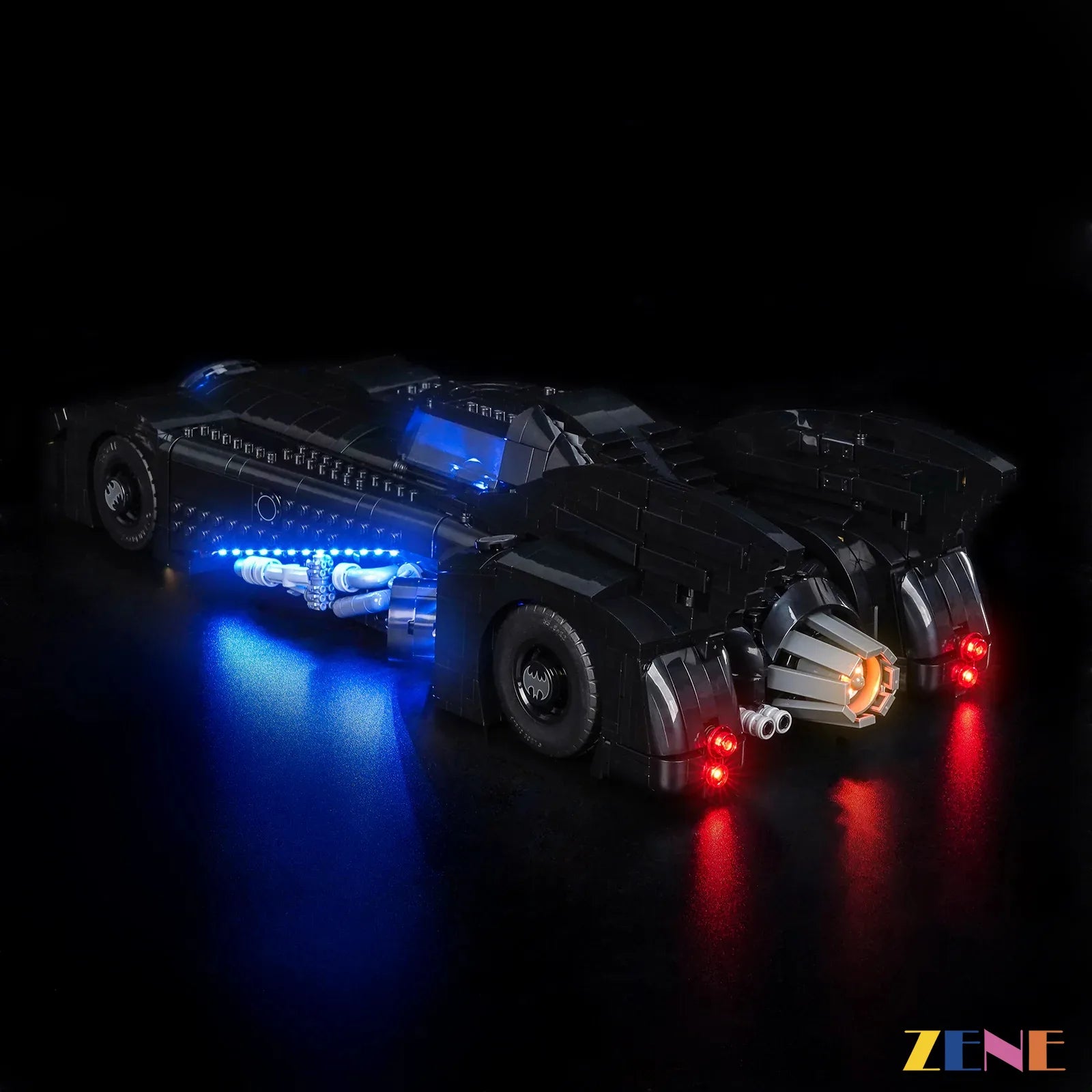
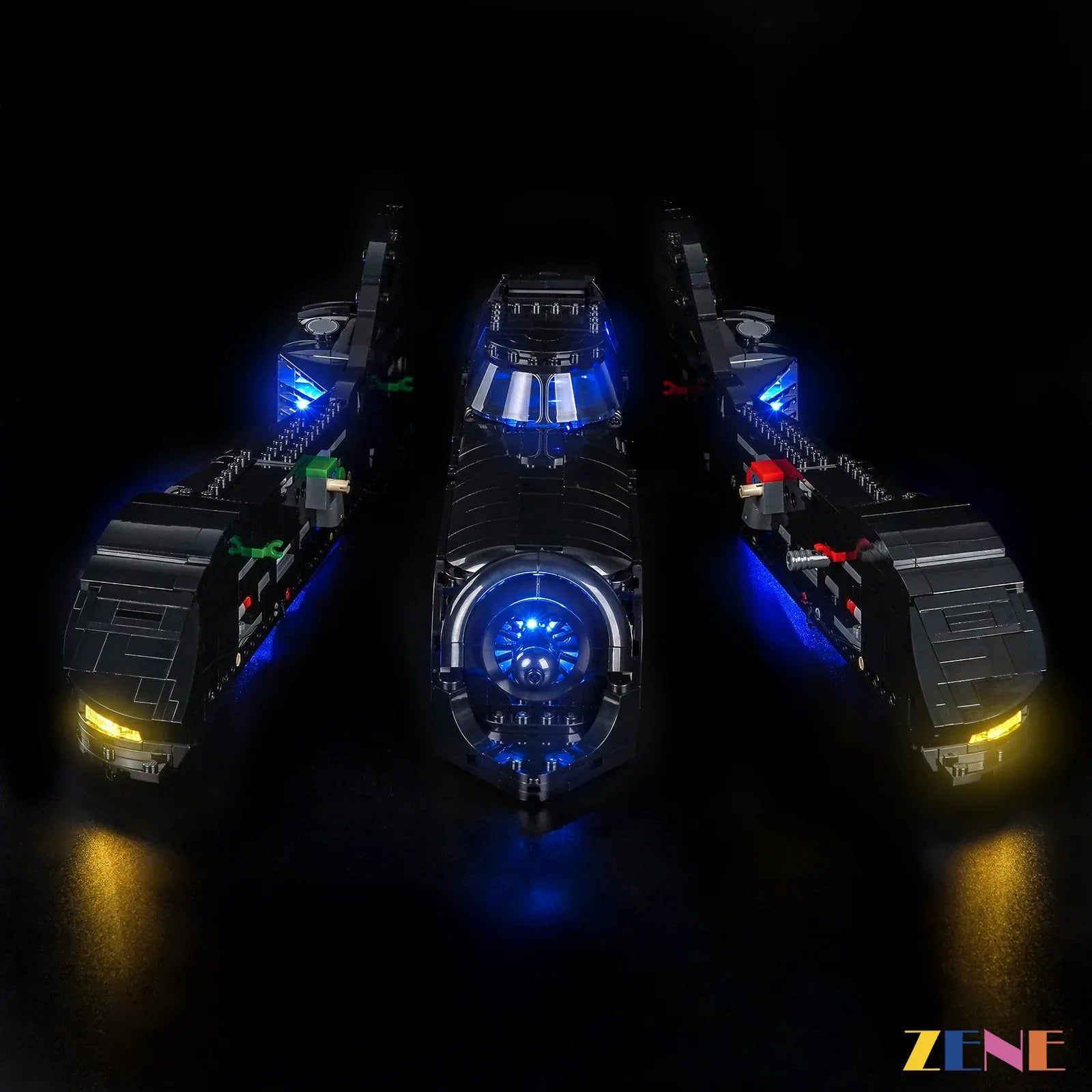
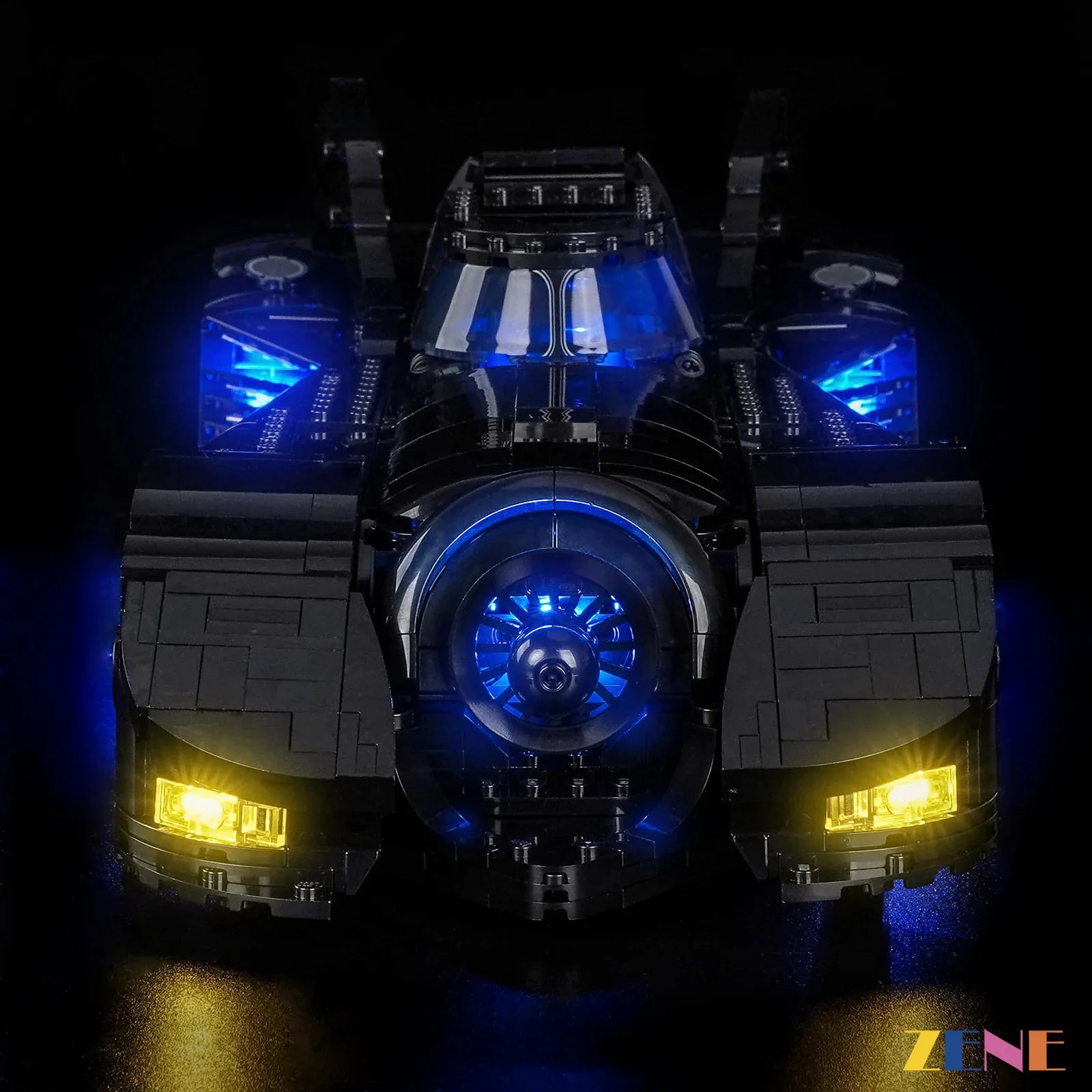
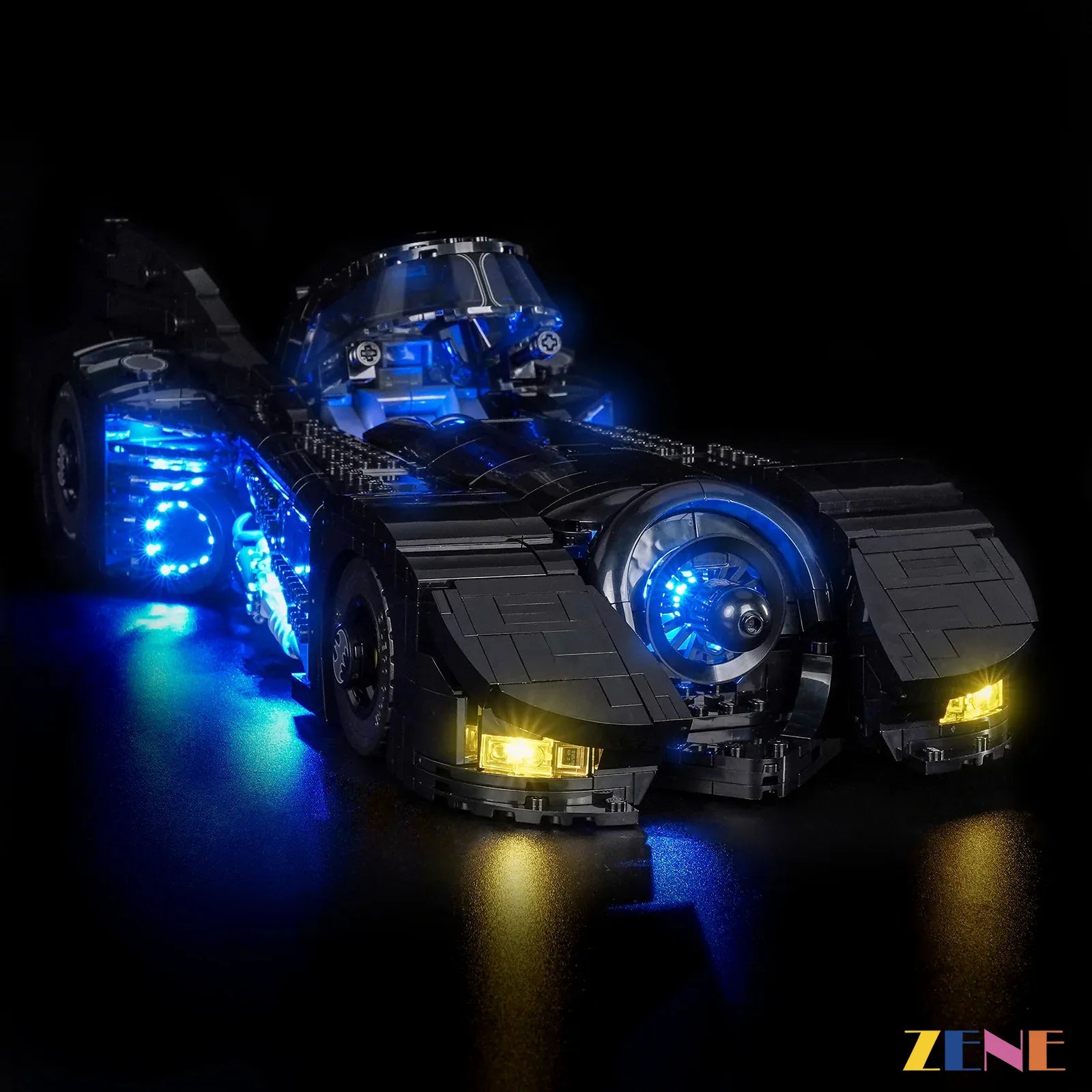
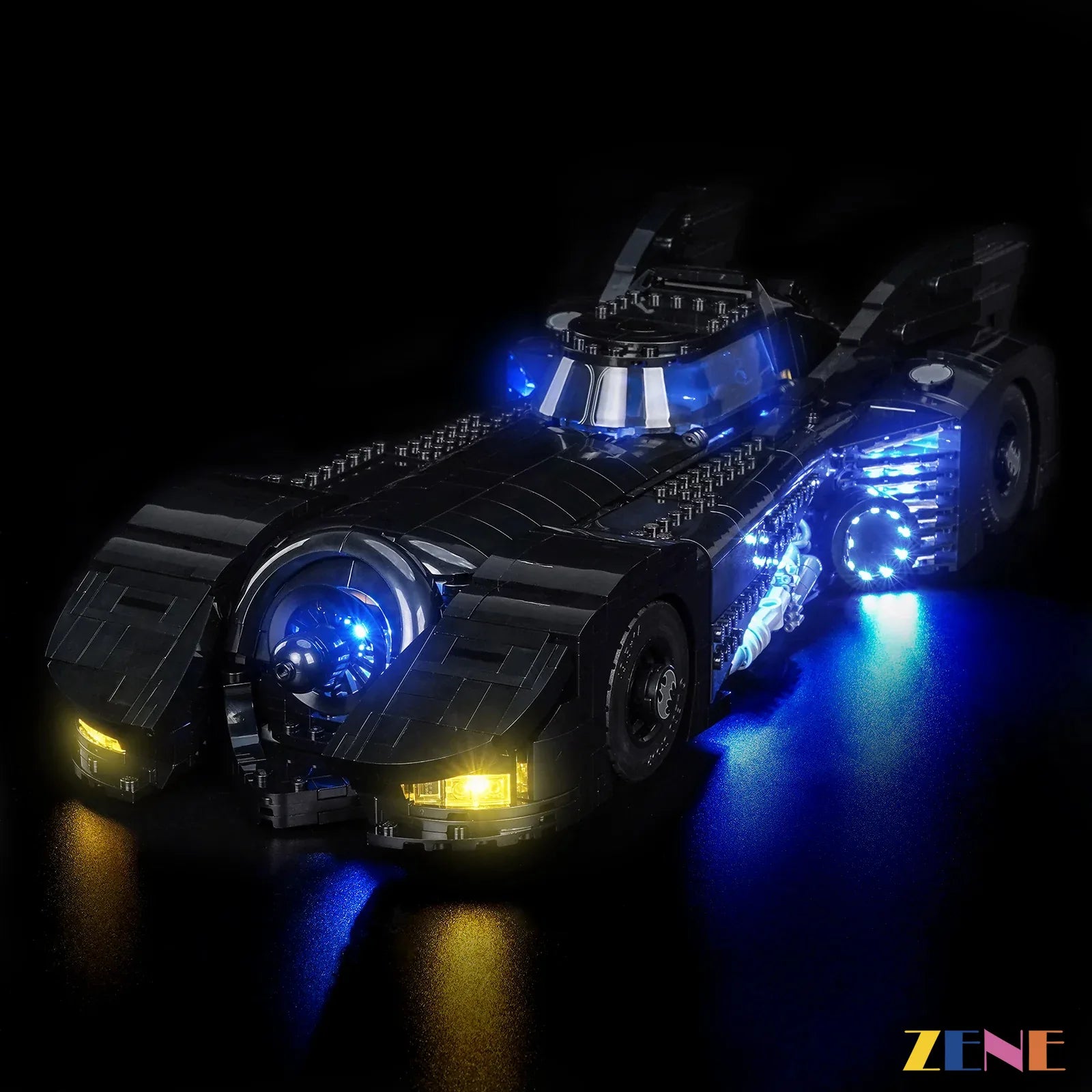
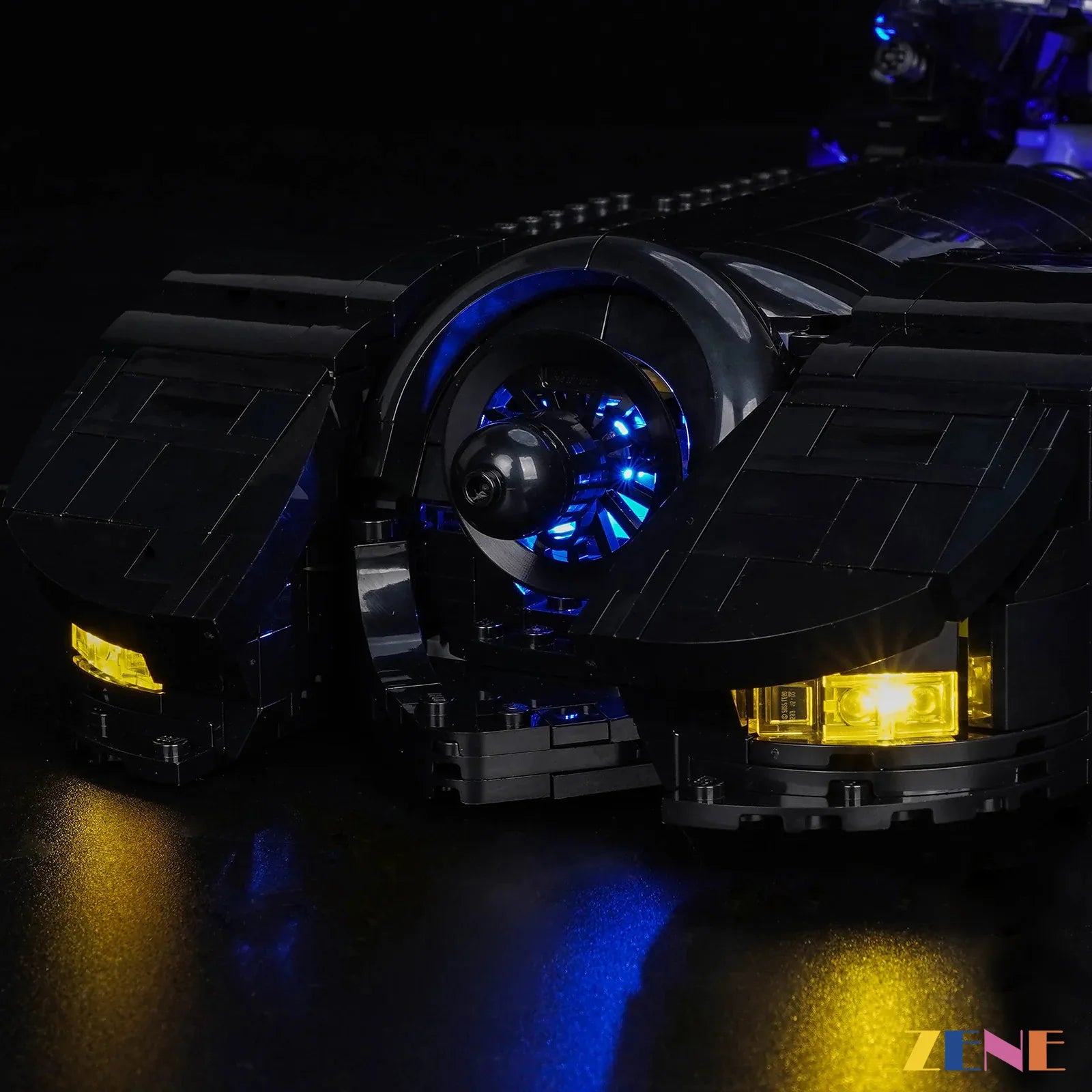
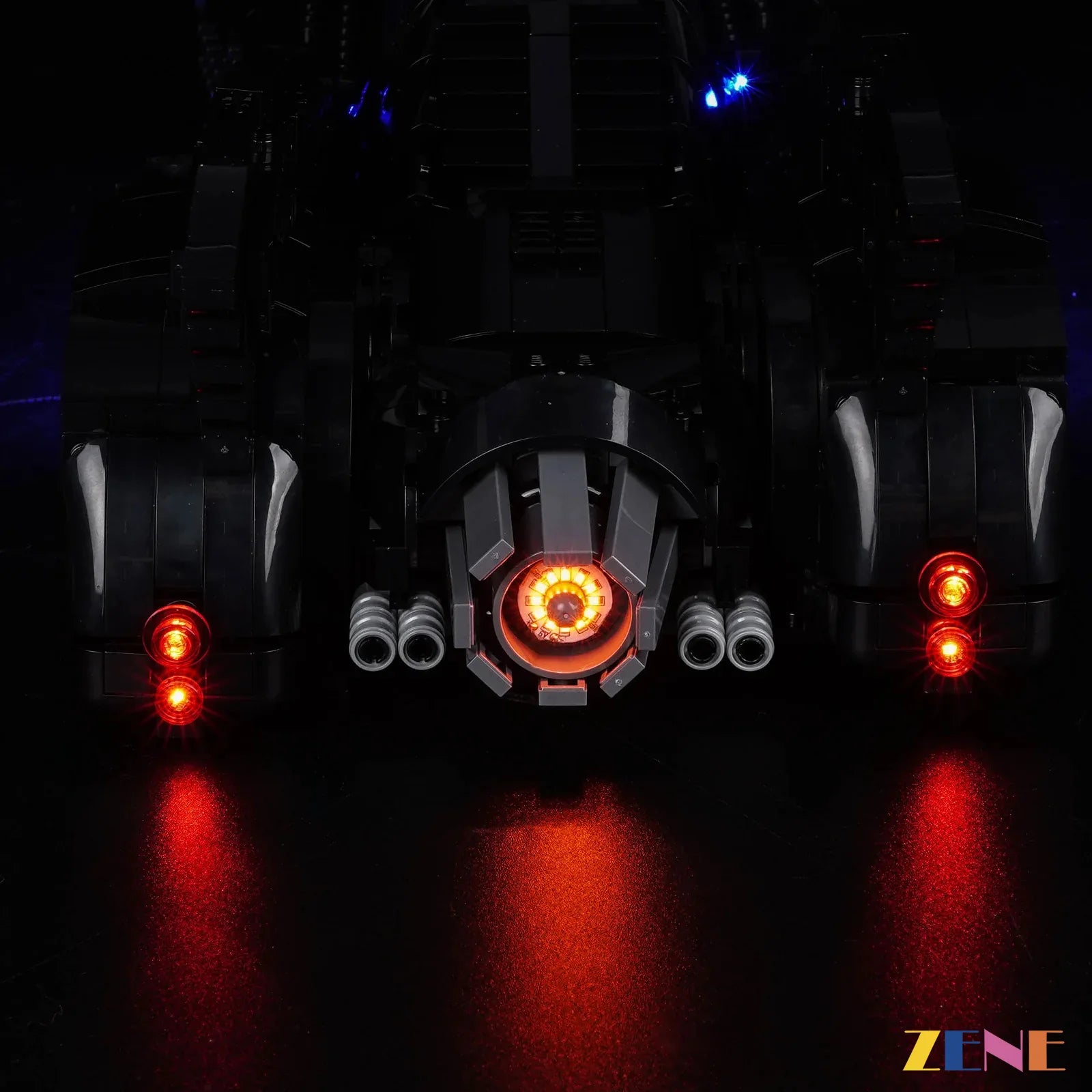
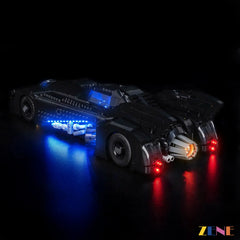
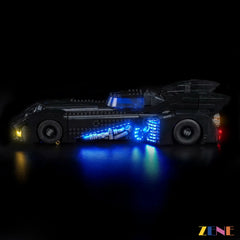
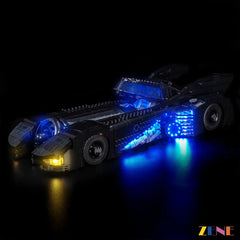
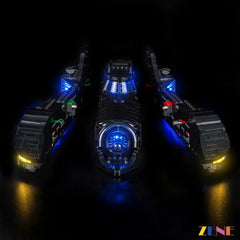
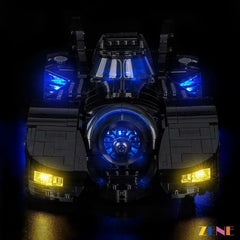
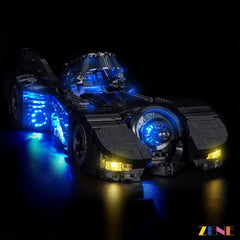
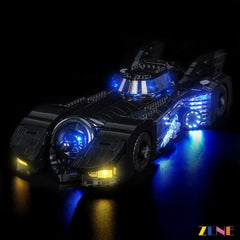
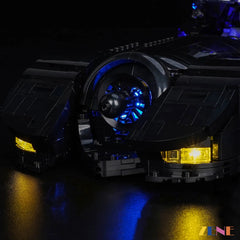
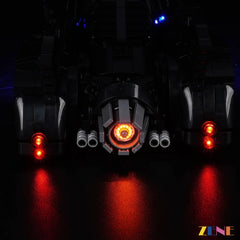
ZENE Bricks plans the install around that movement. Premium yellow lamps sit low at the front, blue light picks out the turbine, cockpit and side machinery, and red points mark the tail. The rear engine housing gets a warm centre, which gives the back of the car a focal point against the black body. The wiring loops stay clear of the side-panel split and the canopy travel, and the battery can sit behind the rear wheels or under the display base.
Classic gives the main lamps, cockpit and rear points in a fixed setup. Remote Control adds a handset, which is more useful here than on a static car because the Batmissile reveal changes which part of the model you want to look at. If the car stays closed most of the time, Classic is enough; if you regularly open the side panels, the remote saves you reaching behind it. Either way, the transformation should still work without unplugging anything.
Our ZENE Bricks Energy-efficient light kit is designed for LEGO Batman Returns Batmobile 76355, the 2,269-piece LEGO DC Batman vehicle based on the 1992 movie. The install is planned around the canopy, front turbine, side intake fins, exposed pipework, rear engine housing, and tail lamps, keeping the official Batmobile and Batmissile display identities easy to read.
Black Batmobiles look sharp under studio light; in a dim room, the same black-on-black panels can swallow the wedge nose, canopy, wheel arches, and rear fins. This kit gives the car separate reference points instead of one heavy shadow. Yellow front lamps lock onto the low nose first. Blue light picks out the turbine, cockpit glass, side machinery, and ribbed vents. Red tail points and the warm rear engine center finish the long body without flattening it. For a collector who bought this set because of the Tim Burton Gotham shape, the value is direct: the lights pull the car's silhouette apart just enough for the curves, fins, and Batmissile hardware to stay visible after dark. It also lands as a clean DC collector gift. A Halloween gift for a Batman fan fits the black body and blue night glow; a Christmas gift for a Batman Returns collector has real story logic, since the film sits in snowy, holiday-lit Gotham.
Visible Light Work
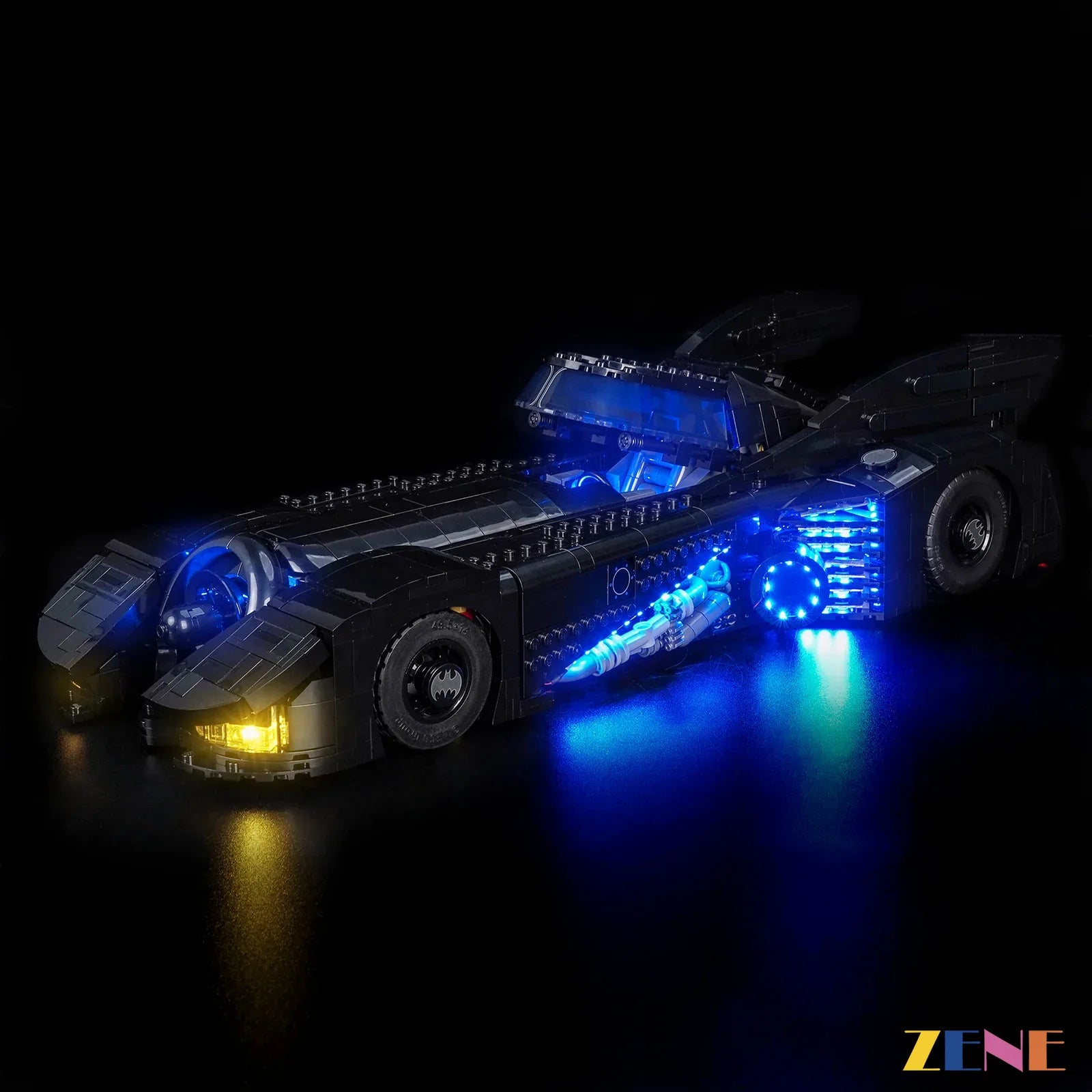
The main lighting zones are easy to scan:
- Yellow lamps sit low in the front corners, matching the narrow headlight cuts.
- Blue output fills the front turbine ring and catches the gray circular housing.
- The transparent canopy gets a cool cockpit wash without hiding the dark windshield shape.
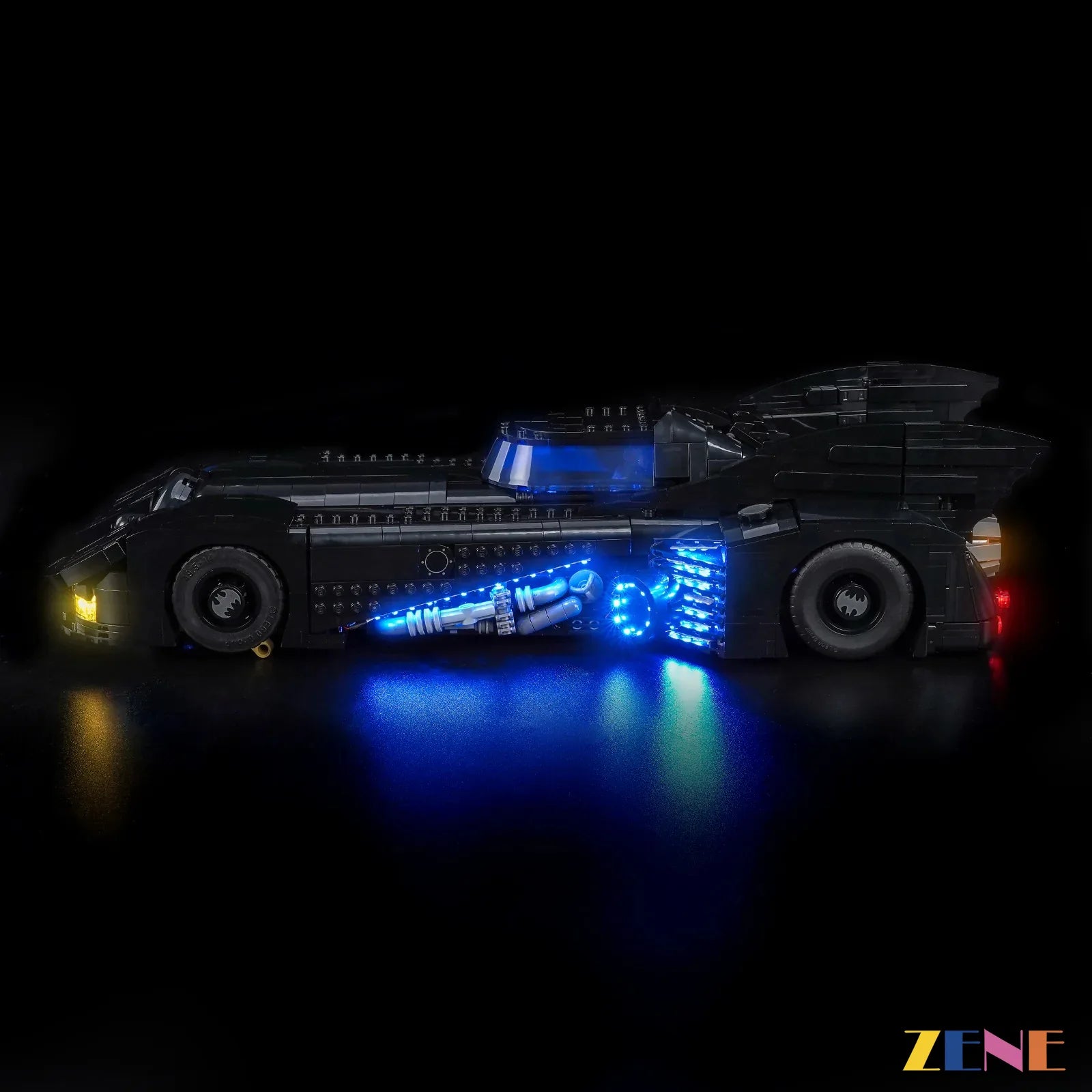
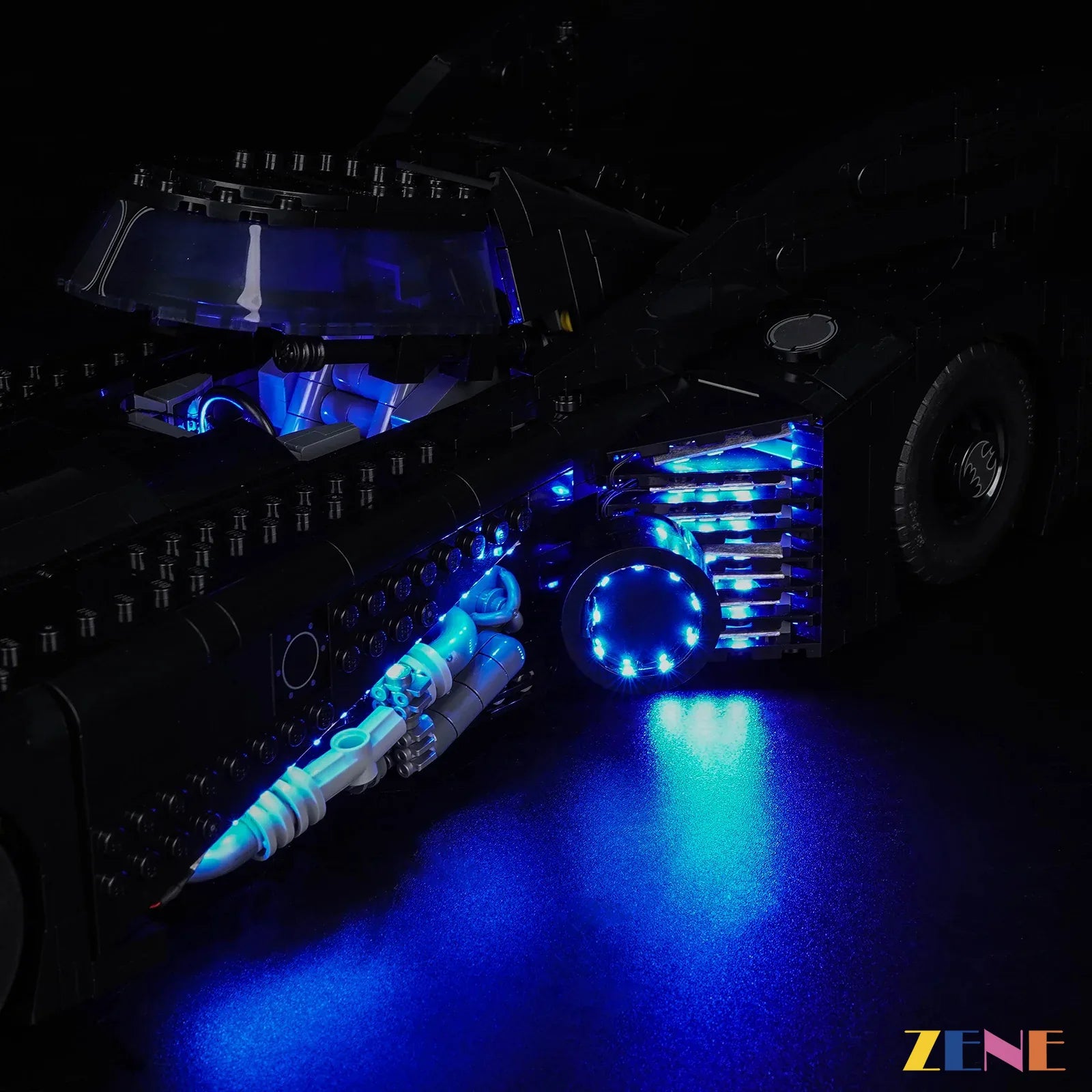
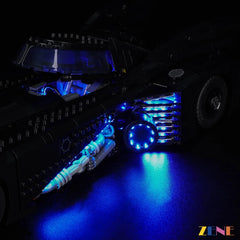
- Side LEDs run along the exposed pipework and into the ribbed intake section.
- Blue wheel-ring points create a hard side marker beside the rear tire.
- Red tail lights and a warm rear turbine glow mark the back end from a low angle.
Side Hardware
The side view is where this model earns most of its lighting. The official set can drop the side panels to reveal the Batmissile, and the images show why the area matters even when the car is closed: long black bodywork, silver pipe clusters, ribbed vents, circular wheel hardware, and a low blue reflection all sit in one narrow band. The blue line under the side panels traces that band without covering it. It catches the white and gray mechanical pieces first, then steps back into the intake fins and the round wheel detail. From a three-quarter angle, the side light also throws color onto the surface below the car, so the Batmobile does not disappear into its own shadow. That is useful for a Gotham City diorama too, especially if the car is staged near a street corner, Bat-Signal tile, or police-chase scene from the Batmissile sequence.
Cockpit, Nose, Rear
The cockpit should stay cold. Blue behind the dark canopy works because the LEGO windshield already has a smoky tint; the light makes the interior panels easier to spot while keeping the glass menacing. At the nose, blue in the turbine sits between the yellow headlights, giving the front face two color temperatures instead of one bright strip. The low wedge reads wider, and the front arch gains a center point. The back end is smaller in the supplied shots, but the red lamps matter because the rear fins and engine housing are almost all black. A warm glow in the turbine cap and red dots at the corners give the tail a proper vehicle signal, not just a black block with wings.
Batman Returns Context
LEGO positions 76355 as an adult Batman build with a realistic cockpit, a caped Batman minifigure on a movie-name stand, 3D building instructions in the LEGO Builder app, and a press-button transformation that reveals the sleek Batmissile escape vehicle. Community discussion around the set keeps returning to the same few points: the 1992 car design looks strong, the Batmissile function is the hook, and the exclusive Batman minifigure with the draped cape-cowl draws attention even from people tired of another Batmobile. The light kit leans into those strengths instead of trying to solve price or minifigure-count complaints. It makes the vehicle display work harder after sunset, then lets the minifigure stand and movie plate stay as the collector cue beside the car.
Wire Path
Route fine wire loops along underside seams, behind the front turbine ring, under the canopy edge, through the side machinery channel, and back into the rear engine housing. Keep the side-panel split area and canopy travel clear before pressing panels back into place. Black bodywork hides most return lines, while the visible lamp leads should sit tight against pipes, vents, and tail sections.