The remote control works up to 10 m and can operate several lights at once.
A fossil in a landscape
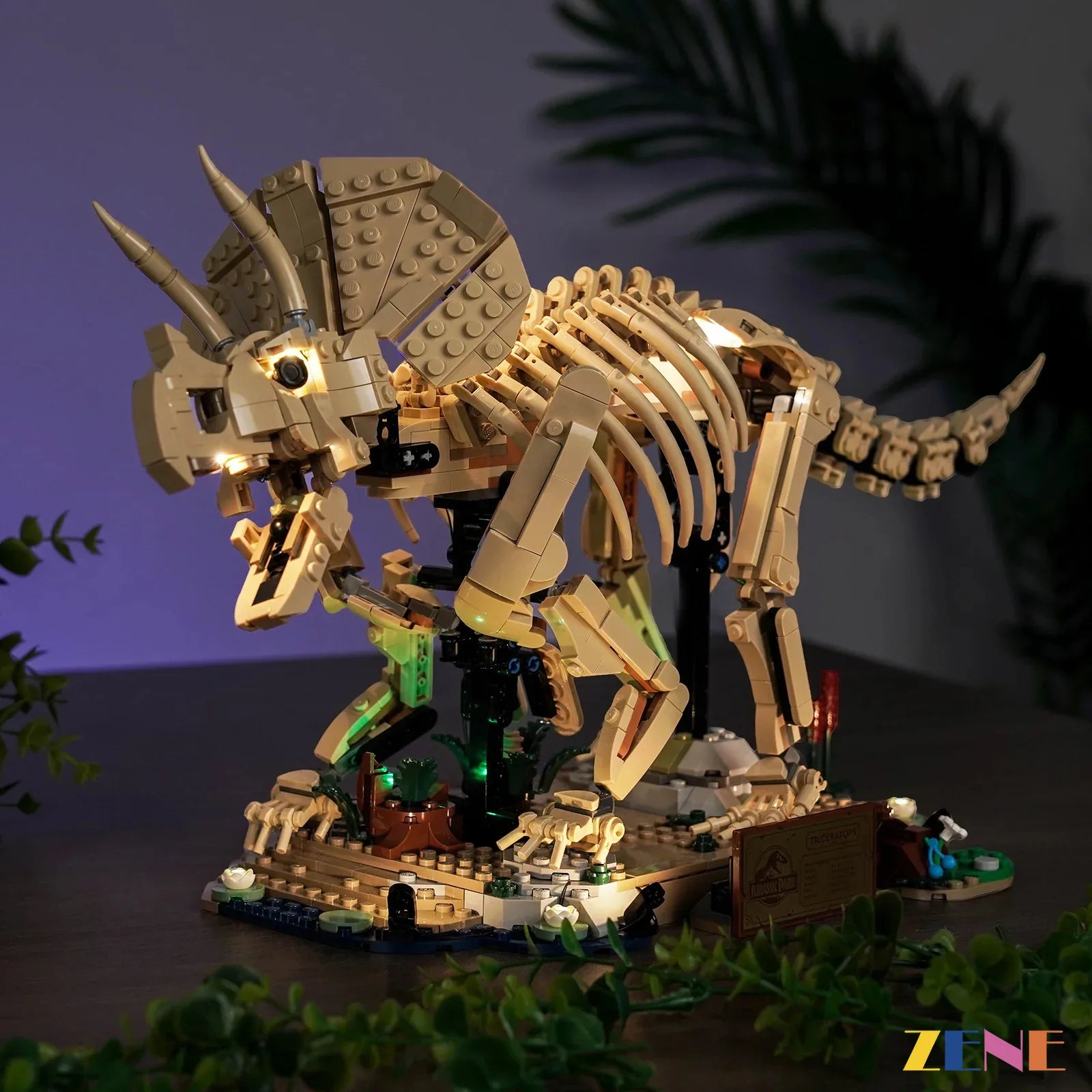
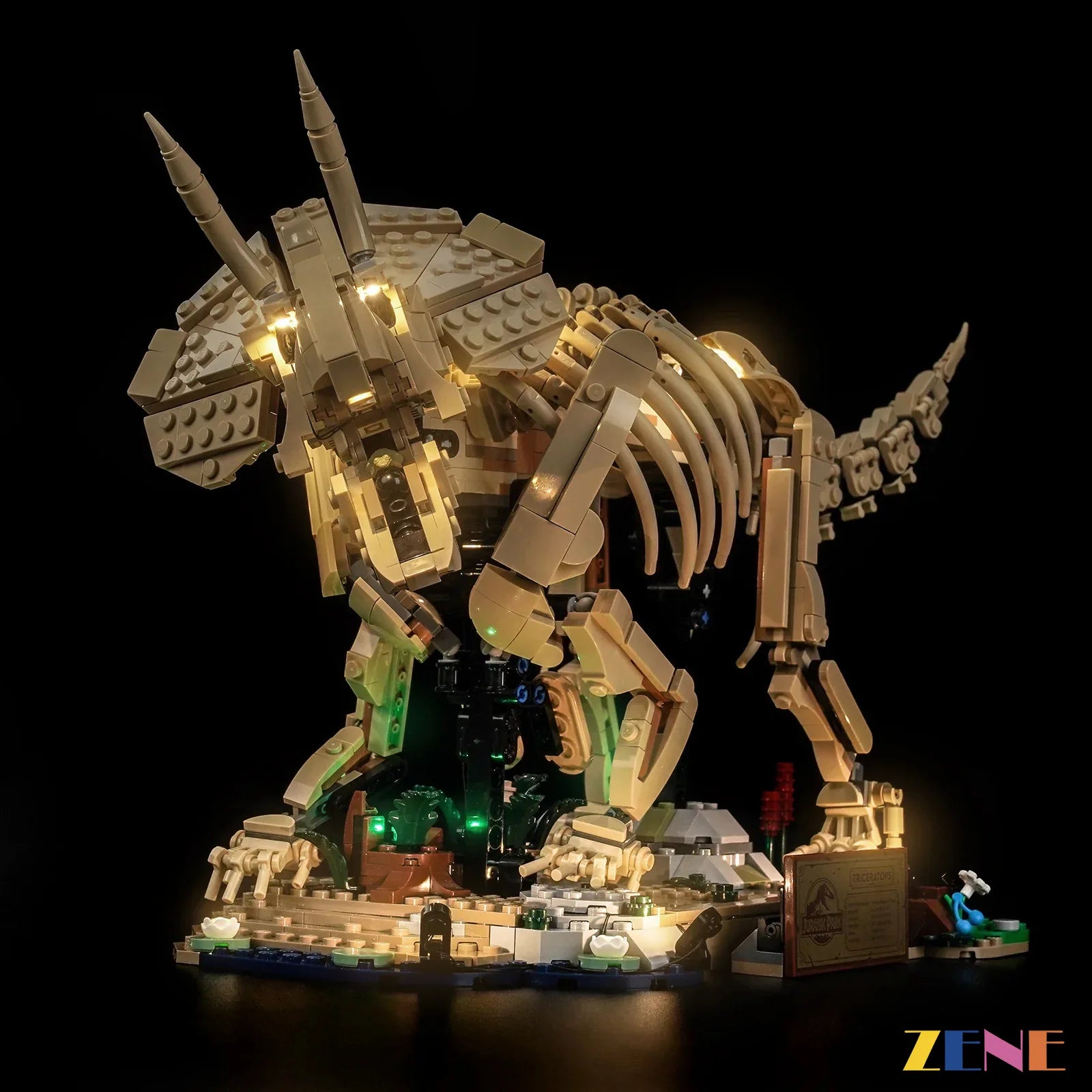
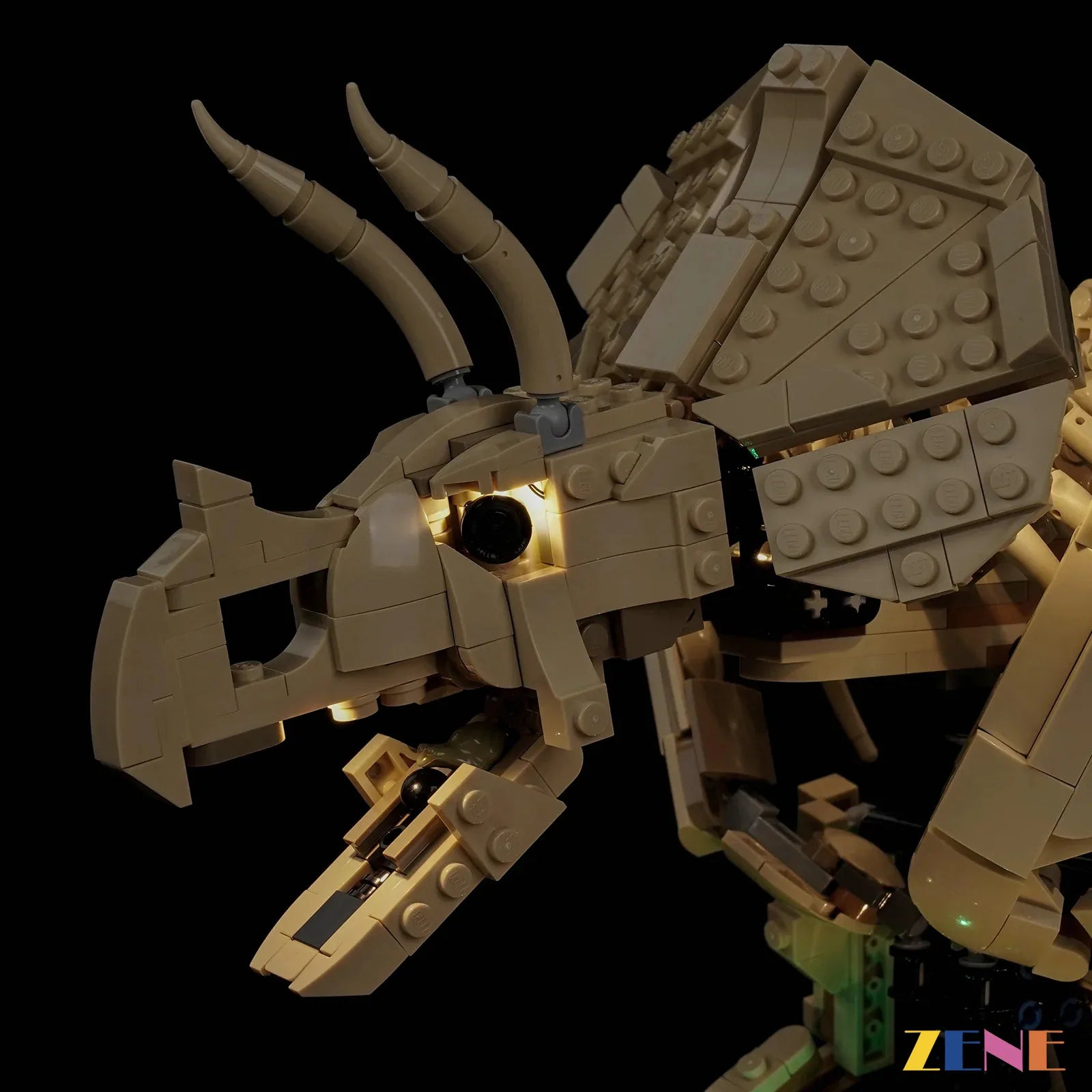
The frill is the challenge the ZENE Bricks layout has to solve. It is broad and curved, so a frontal source flattens it into a shield. A key light from the side, with a weaker cool fill behind, keeps the curve visible and puts the horns into relief. The bone should stay warm, but the wetland green should sit lower, so the plants read as atmosphere rather than a second light source. The waterline can take a narrow highlight; the rest of the base should stay dark enough for the skeleton to dominate.
Triceratops is known from dozens of skulls, which is why its face is so familiar. The first specimen found in 1887 was initially mistaken for a bison; Marsh named the genus two years later. The frill and horns have been explained as defence, display and species recognition, and the debate is still part of what makes the animal interesting. LEGO 1,154-piece 77985 Dinosaur Fossils Triceratops presents the skeleton in a wetland setting, with an articulated head, legs and tail, a single minifigure and a base of plants and water.
Classic and Remote Control are both available. The remote version is useful here because the balance between bone and wetland changes with the room; being able to lower one zone without touching the other is more practical than a fixed setting. Cable runs along the rear legs and under the base, and the battery stays hidden below. Bricks Dinosaur Fossils Triceratops set is a fossil, but the lighting makes it look like an animal that has just stopped moving.
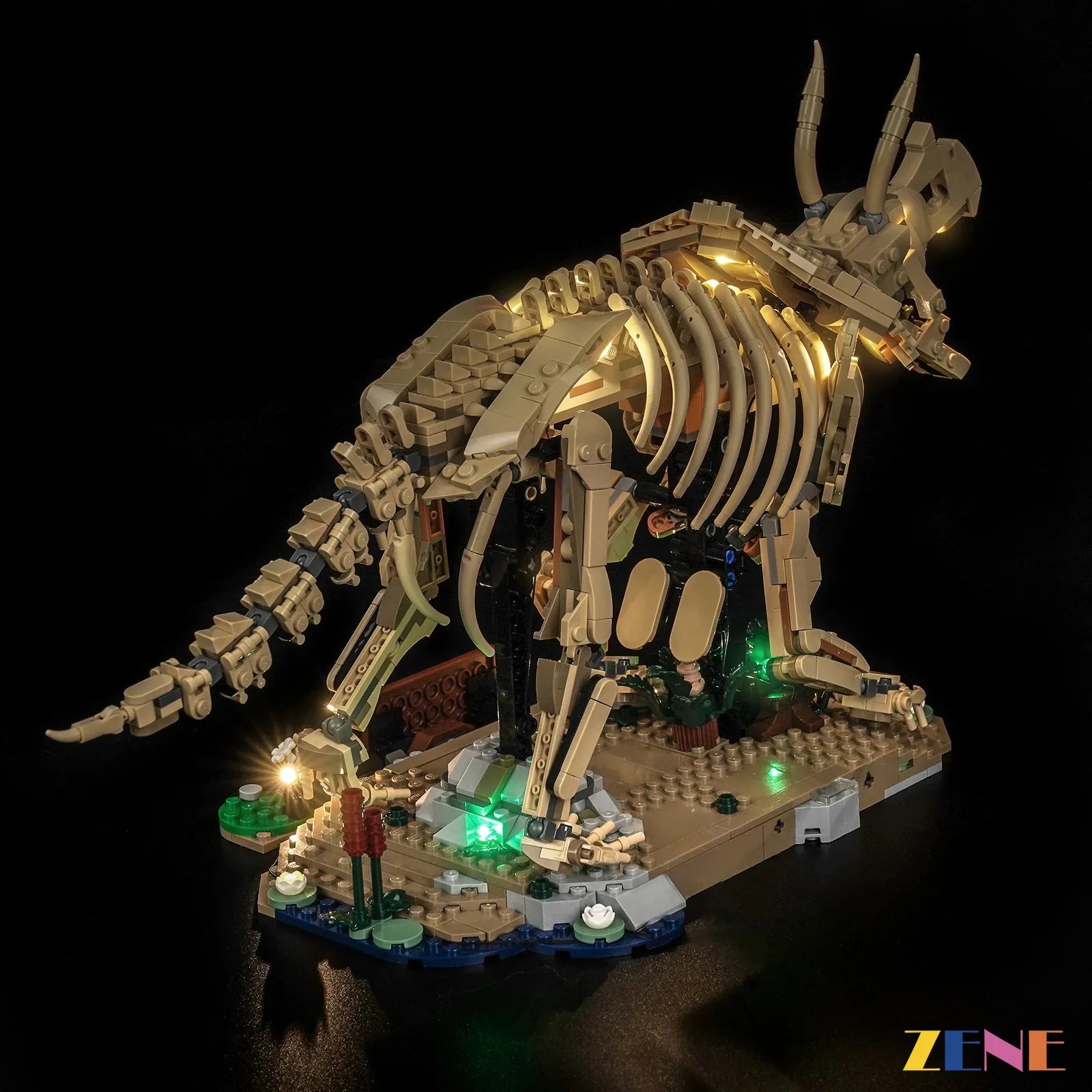
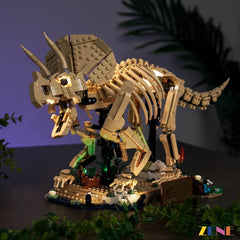
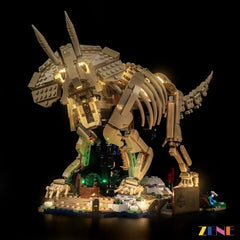
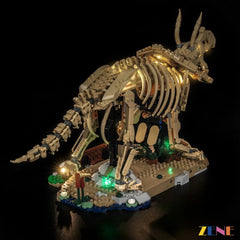
Built specifically for LEGO Jurassic World Dinosaur Fossils: Triceratops 77985, this ZENE Bricks light kit keeps the fossil display recognizable while changing how it holds a dark room. The articulated head, legs, tail, and opening jaw remain fully usable, while focused lighting draws attention to the skeleton and wetland base instead of flooding the entire build. The lighting stays tied to the display’s paleontology theme, with no oversized effects, flashing color changes, or distracting spill. Even in a daytime, controlled pools around the head, spine, feet, plants, and waterline separate the build into readable shapes. You can even use it with your Dinosaur Fossils: Tyrannosaurus rex #76968 to build a real dinosaur park. Beyond just simple models, you can enhance their details, transforming them into more exquisite works of art.
Warm Bone Highlights
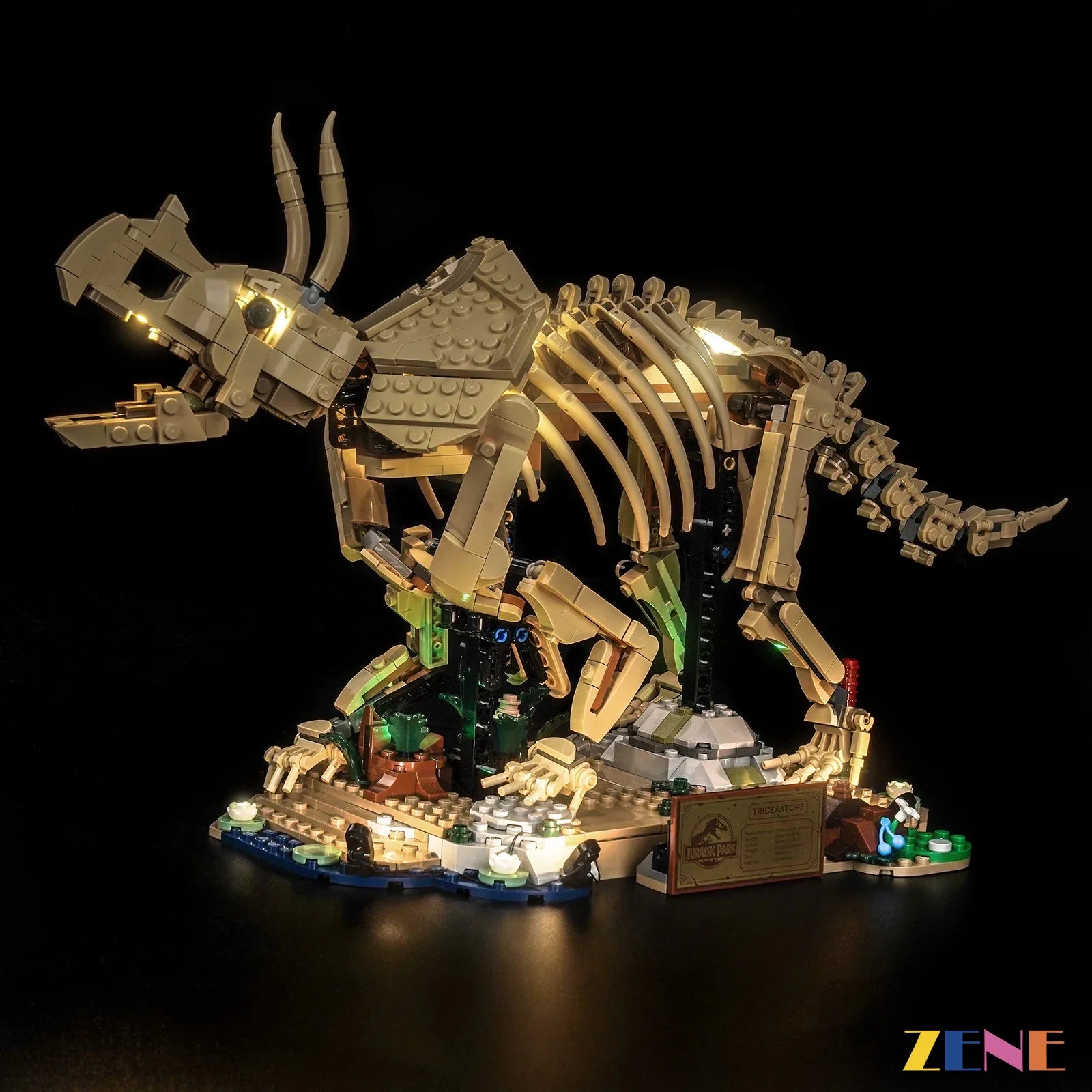
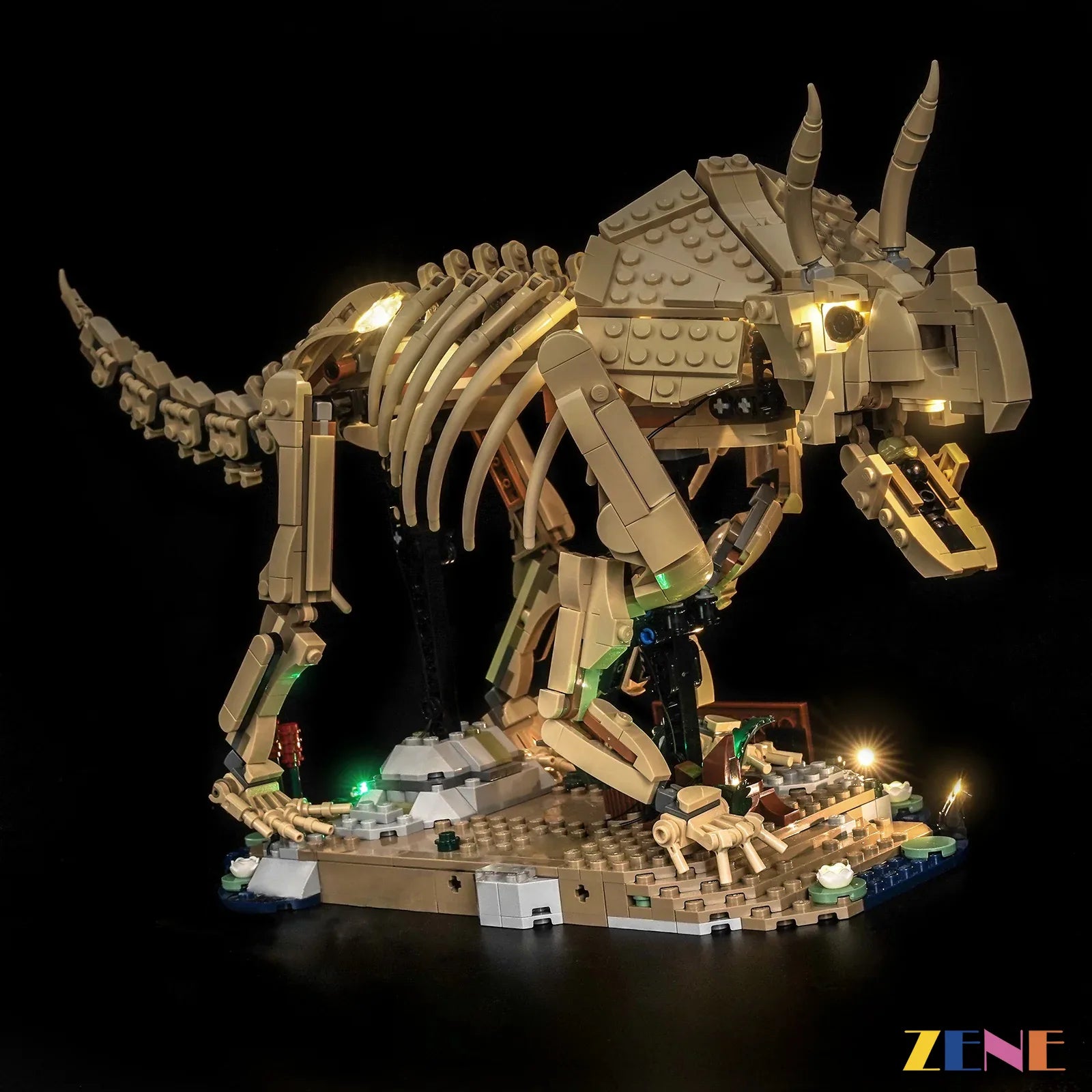
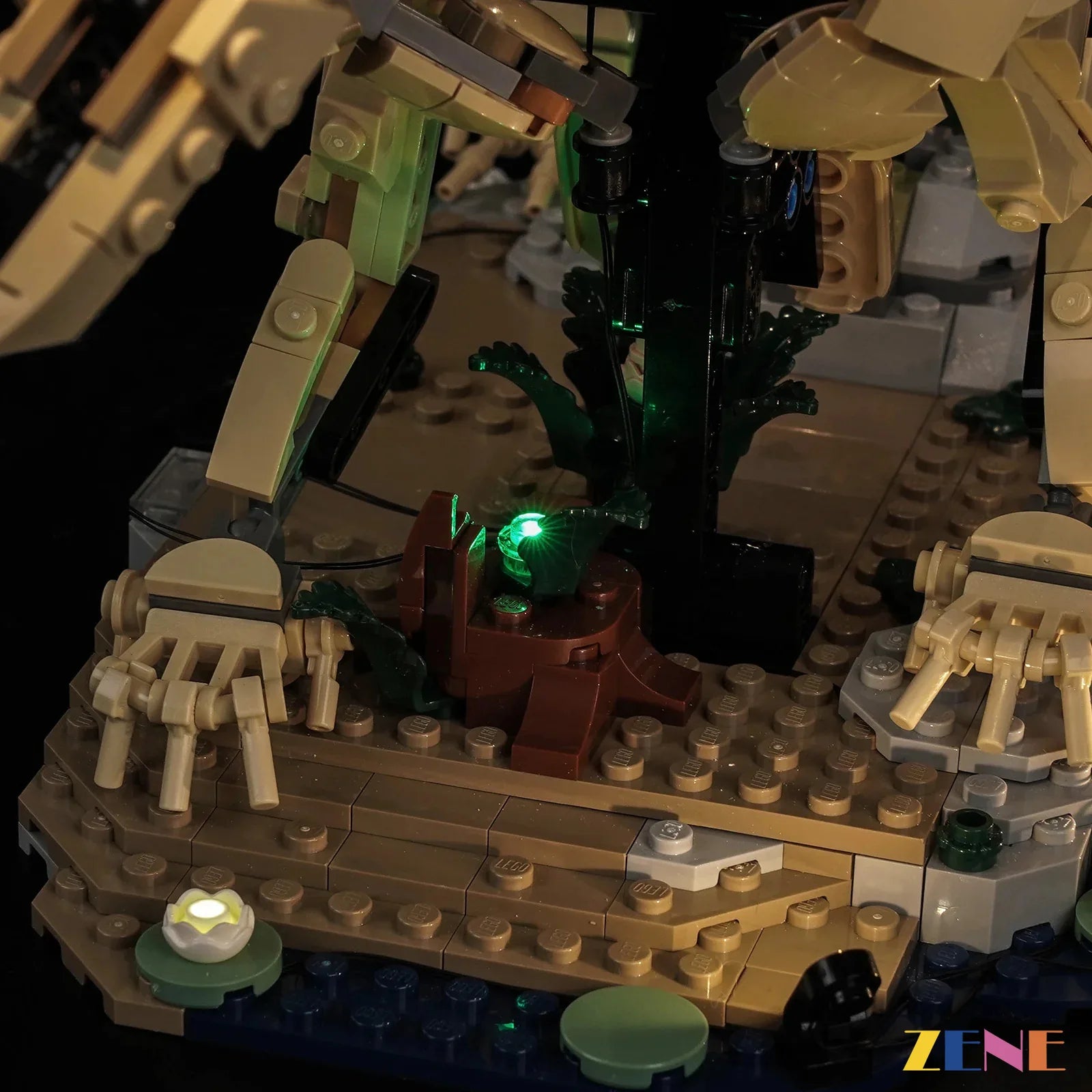
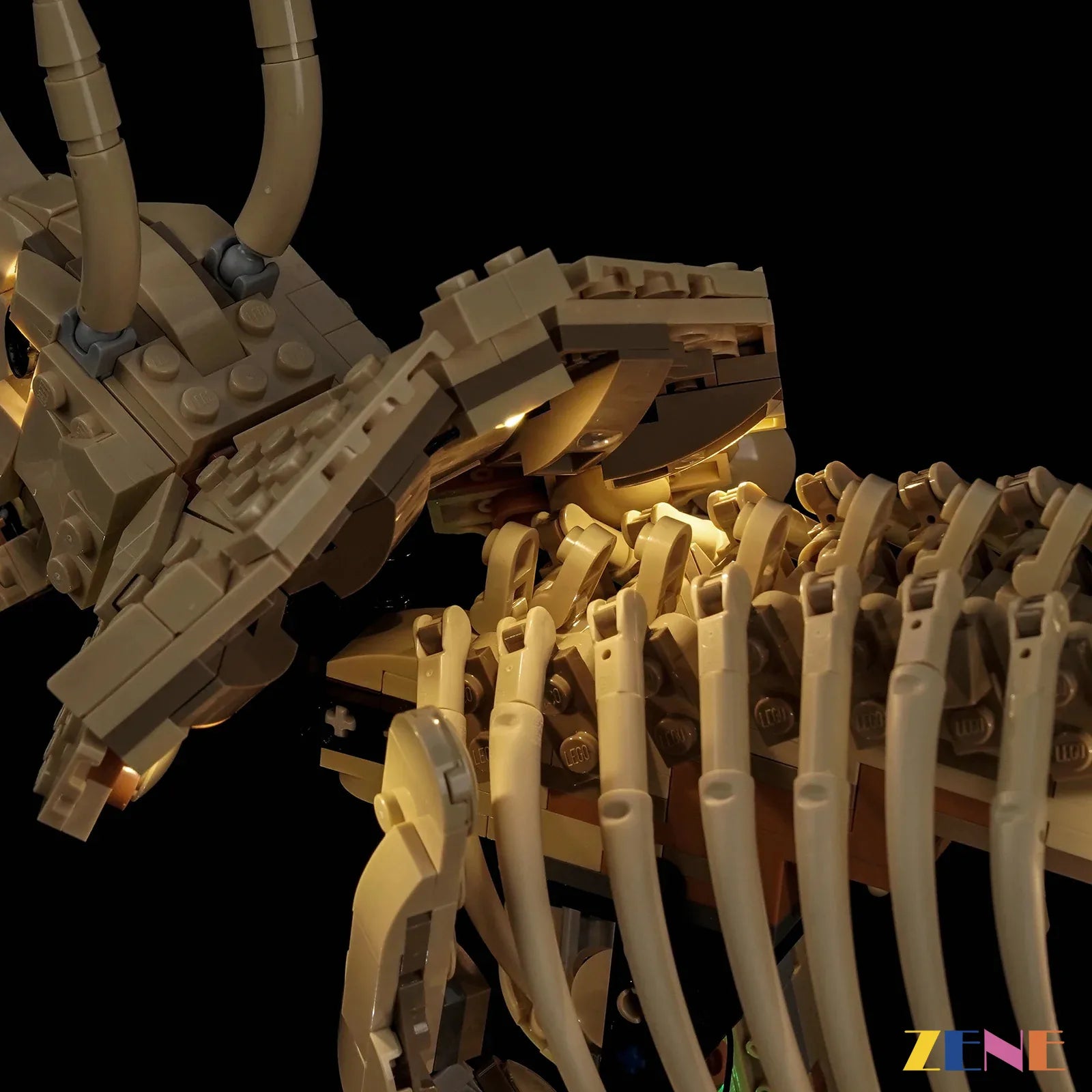
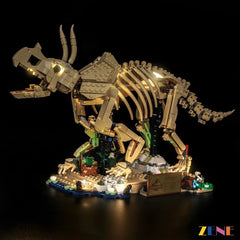
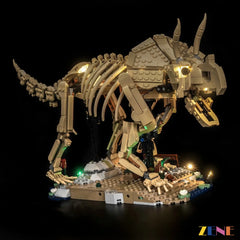
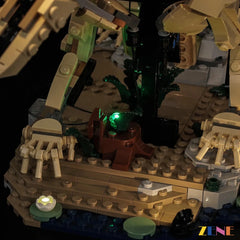
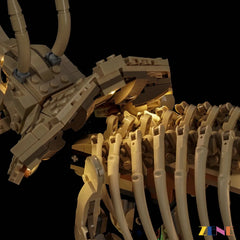
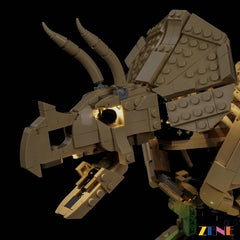
Warm white LEDs sit close to the skull, neck, ribs, spine, feet, and selected points around the terrain. At the head, the light catches the black eye element and slips beneath the brow plates, leaving firm shadows around the horns and broad frill. That contrast makes the face easy to recognize from across a room without washing out the tan and sand-colored bricks. A softer pool beneath the jaw reveals the hinge and lower skull shape, so opening the mouth still produces a noticeable change in silhouette. Across the torso, small pockets of light appear between the ribs instead of coating every bone in equal brightness. The inner skeleton stays darker while the outer rib curves pick up narrow highlights along their edges. Those alternating bright and shaded sections keep the repeated bone pieces from blending together and expose the layered plates along the shoulder and spine. The effect feels closer to a carefully lit museum mount than arcade-style illumination. Down on the base, localized green points sit among plants, rocks, and dark support elements, creating brief reflections on nearby leaves and glossy black pieces. Small white accents near the flowers and waterline add crisp reference points along the front edge. Warm bone light above and green wetland light below remain clearly separated, preventing the pale skeleton, brown ground, blue water, and plant pieces from collapsing into one muddy mass.
Routing That Stays Clear
Those separate lighting zones depend on careful wire routing. ZENE Bricks uses extremely thin cables that tuck along brick seams, behind bone sections, and through the dark interior supports where they are difficult to notice at normal display distance. The wires avoid the working joints and open spaces around the head, jaw, legs, and tail, so the original posing options stay available after installation. Nothing drags across a hinge, presses against a joint, or sits where a moving section can pinch it. That matters because the display changes character whenever the head angle, jaw position, or leg stance is adjusted. You can re-pose the Triceratops without pulling loose cable from the neck or checking whether a wire has crossed the mechanism. The lighting hardware stays close to the structure instead of hanging beneath the ribs, preserving the clean fossil outline. Brightness is also practical for long viewing sessions. The LEDs reveal edges and cavities without throwing harsh points straight toward the viewer, and the warm tone avoids turning the tan pieces pale yellow or white. Green lights remain localized around the wetland plants and base, so they add atmosphere without tinting the skeleton. Even beside a monitor, keyboard, or neon display setup, the model keeps its original color separation and does not compete with every other light source on the desk.