Why a Jeep is the right model to motorise
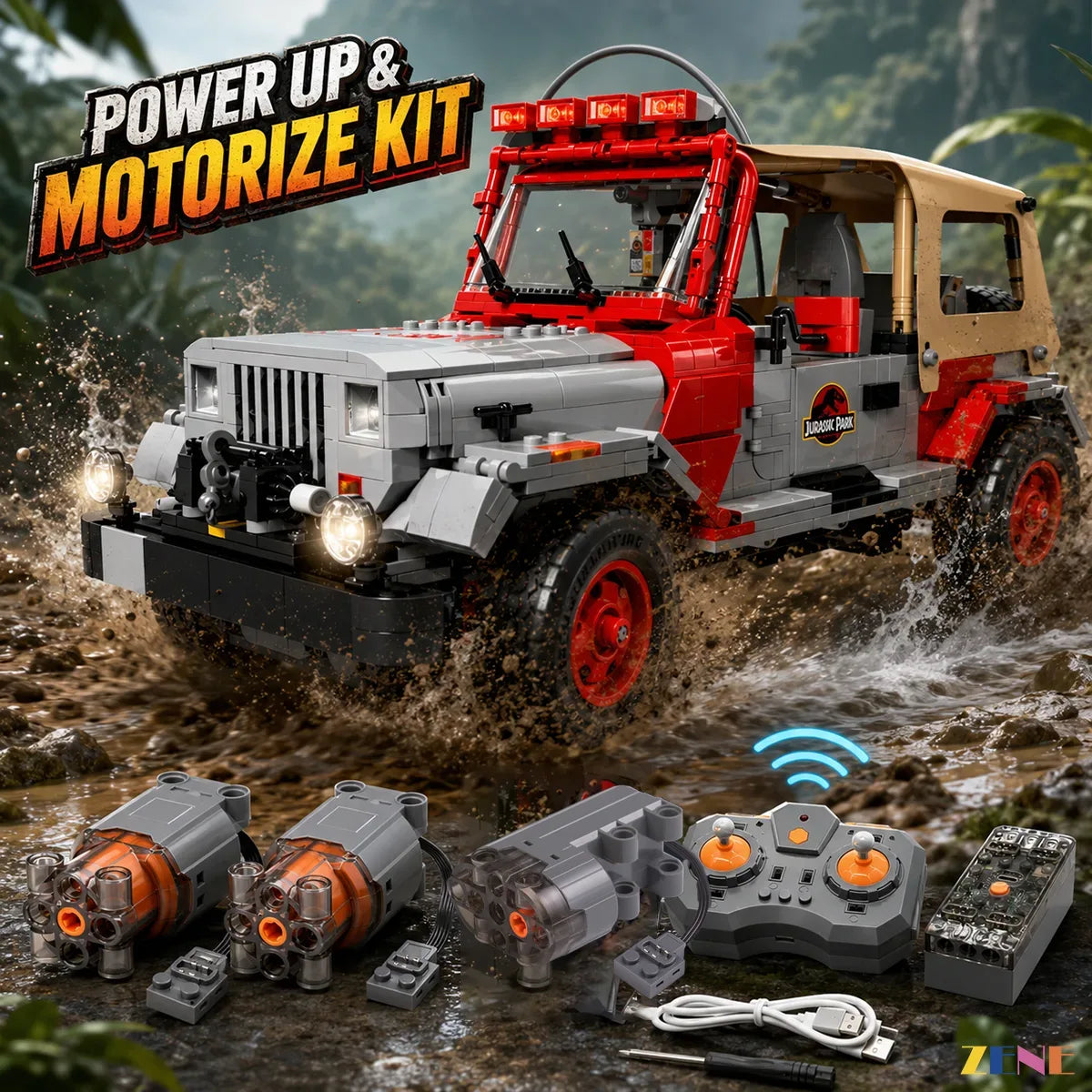
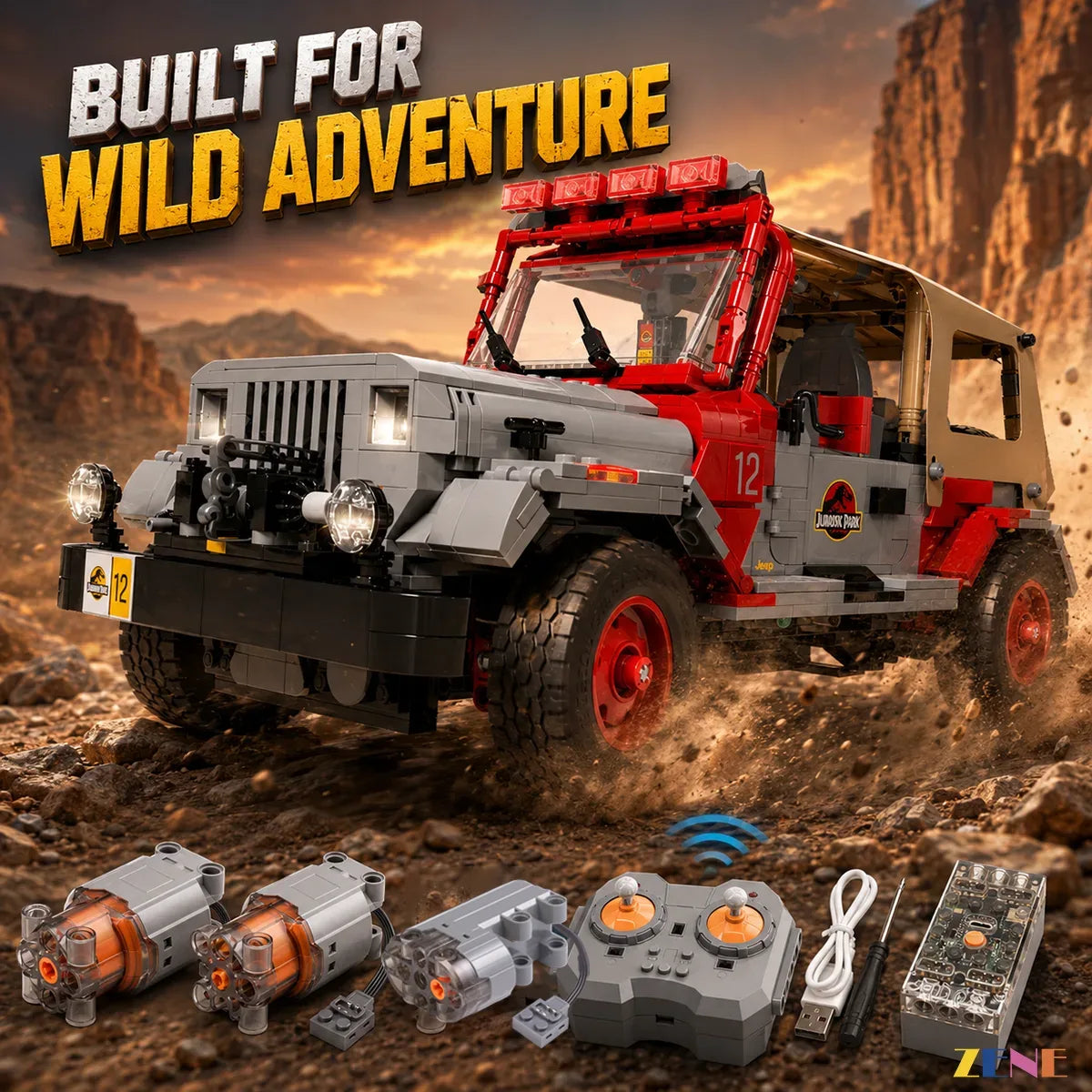
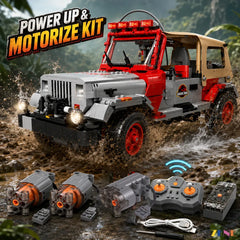
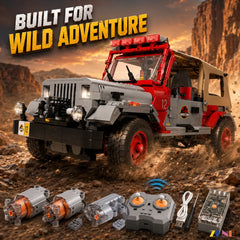
The 1992 Jeep Wrangler Sahara was built for exactly the kind of terrain the film puts it in: a ladder frame, solid axles, a part-time four-wheel-drive system and a torquey inline-six. It was never a fast car, and that is part of its character. A motorised LEGO version should feel the same way. The ZENE Bricks Power Functions kit gives the 77984 Jurassic Park Jeep two L motors for drive, a servo motor for steering, a rechargeable battery and a handheld controller that also works with a phone app.
The point is control, not speed. ZENE Bricks Premium PF kit is rated for around 6 km/h, which is quick enough for an indoor trail but slow enough to steer around furniture. Two drive motors share the load, and the servo gives the front wheels a more predictable response than a single motor setup. A few books, some loose bricks and a length of carpet make a better test course than a flat floor; the Jeep should look like it is working, not racing.
This is a separate upgrade from the light kit, and the two can be used together. Keep the motor cables away from the steering linkage and the driveshaft, leave the battery accessible for charging, and do not run the model through water or wet ground. The body stays standard, so the Jeep can still be displayed as a parked vehicle when the driving session is over.
The ZENE Bricks Power Functions Kit for Jurassic Park Jeep Wrangler #77984 turns a display model into a remote-controlled off-road vehicle with low latency PF Motor Kit through mobile phone or operating handle Remote Control, high compatibility, smooth installation and texture. Instead of leaving the Jeep parked on a shelf, you can drive it across the floor, steer around furniture, build a small trail course, or recreate chase scenes inspired by the Jurassic Park setting.
The conversion keeps the brick-built appearance of the original model. The motors and control parts are installed inside the structure, so the finished Jeep still looks like the set you built. No cutting, gluing, or permanent modification is required. The upgrade can also be removed later if you want to return the model to its standard form.
- Highest speed: 6km/h +
- Suggested for unassembled or disassembled parts of the chassis.
Our Power Functions Kit includes:
- Step-step modification instructions in PDF format provided.
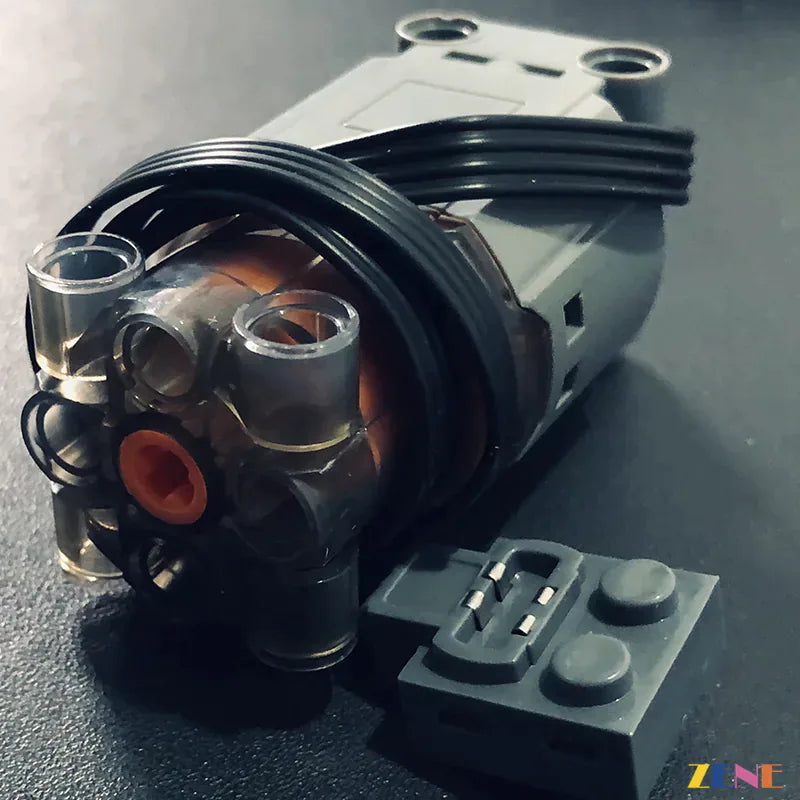
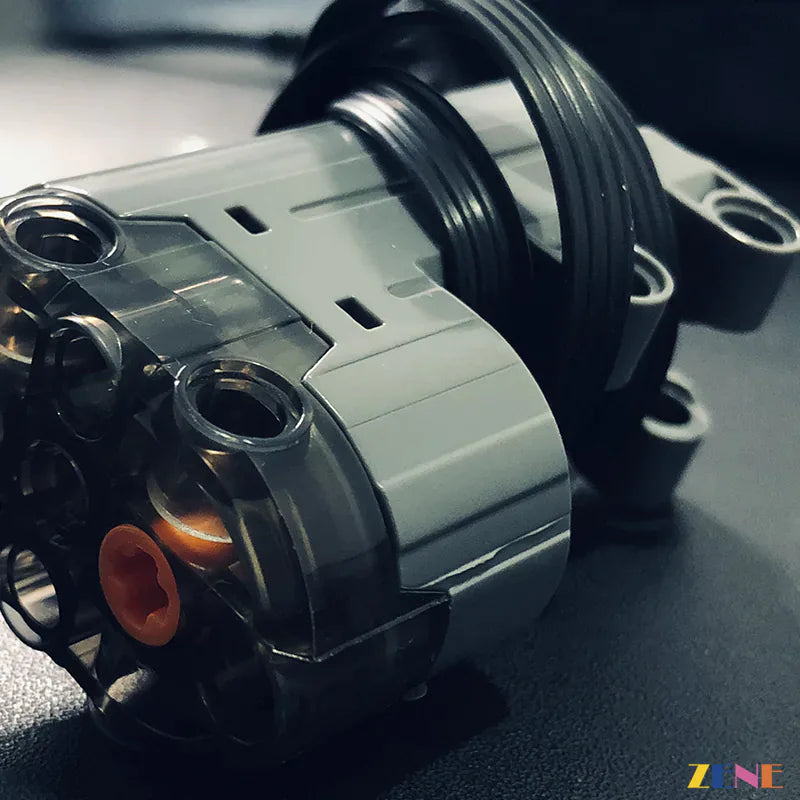
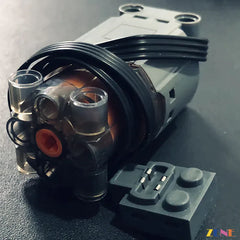
- New generation L motor x 2
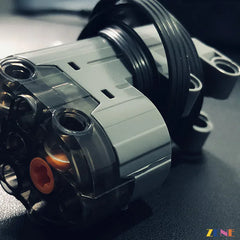
- New generation Servo motor x 1
- Lithium battery
- Remote Control (supporting mobile phone APP control)
- Modification Accessories.
- Screwdriver bit, USB charging line.
Note:
- It is recommended to refit simultaneously during build.
- Eco-friendly ABS plastic.
Off-Road Scene Simulation
This setup works well for indoor play and staged photography. Place a few rocks, branches, ramps, or loose bricks around the Jeep to create a simple jungle route. The vehicle can move through the course while the steering system helps it change direction and avoid obstacles.
You can also use the motorized Jeep in stop-motion clips or short product videos. A slow approach shot, a quick turn, or a drive through a shallow terrain setup adds movement without needing to push the model by hand. For display scenes, park the Jeep beside a dinosaur model, then drive it away with the controller to simulate an escape sequence.
The upgrade is not intended to turn the model into a waterproof RC truck. Mud, deep water, sand, and outdoor debris may damage the electronic parts. A dry tabletop course or clean indoor floor gives the best balance between movement and model protection.
Drive and Steering Control
Two L motors provide the driving force for the wheels. Using a pair of motors helps distribute the load and gives the Jeep enough power for normal indoor driving. The vehicle can move forward and backward, making it suitable for both straight runs and small obstacle layouts.
A separate servo motor controls the steering. This gives the front wheels a more controlled response than a basic motor-only setup. You can guide the Jeep through turns, line it up for a display shot, or make small steering adjustments while driving at a lower speed.
The included handheld controller lets you manage the vehicle without touching the model. The twin-stick layout keeps driving and steering separate, which makes the controls easy to understand. Speed can be adjusted gradually, so the Jeep does not have to move at full power every time. Slower movement is useful for narrow spaces, filming, and younger builders learning the controls.
Designed for Retrofit Installation
The motorization module is designed to be installed after the model has already been completed. You only need to open the required sections, add the drive parts, route the cables, and rebuild the surrounding pieces. The process does not require rebuilding the entire Jeep from the first step.
Motor placement is planned around the existing structure. The cables stay close to the internal frame and away from the moving steering parts. Once installed, the battery and receiver are kept within the vehicle rather than hanging outside the body.
The battery unit can be removed or accessed for charging when needed. This makes the model easier to maintain, especially when it is used for regular demonstrations, photography, or weekend play.
More Than a Display Upgrade
This kit adds a practical function without changing what makes the Jeep recognizable. It works as an interactive project for experienced builders, a shared activity between parents and children, or a simple introduction to motorized brick models.
It can also be used in a Jurassic-themed collection where several vehicles and creatures are arranged together. The ability to move the Jeep gives the scene a clear focal point and makes the display easier to film or demonstrate.
The package includes the motors, steering component, battery system, remote controller, connection parts, and installation guidance needed for the conversion.
Power kit only. LEGO model is not included.